Publications

2026
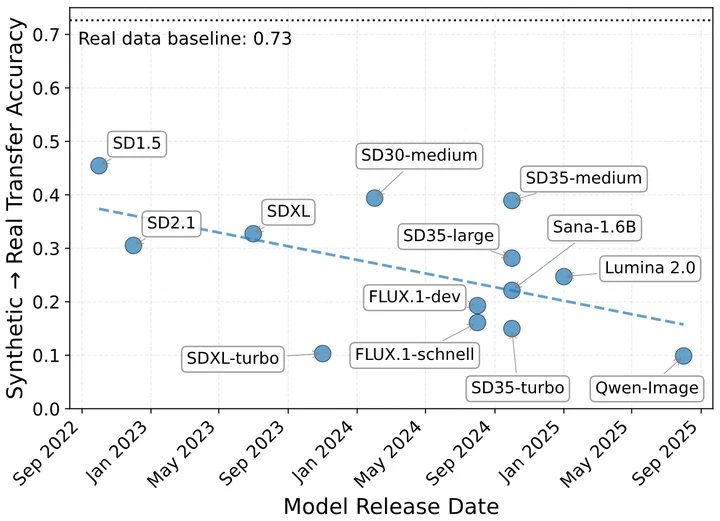
When Pretty Isn't Useful: Investigating Why Modern Text-to-Image Models Fail as Reliable Training Data Generators
arXiv

We show that newer text-to-image models are progressively worse as training data generators, despite better visual quality, because they collapse to a narrow aesthetic-centric distribution that diverges from real data.

PDF
2025
PRISM: Diversifying Dataset Distillation by Decoupling Architectural Priors
arXiv

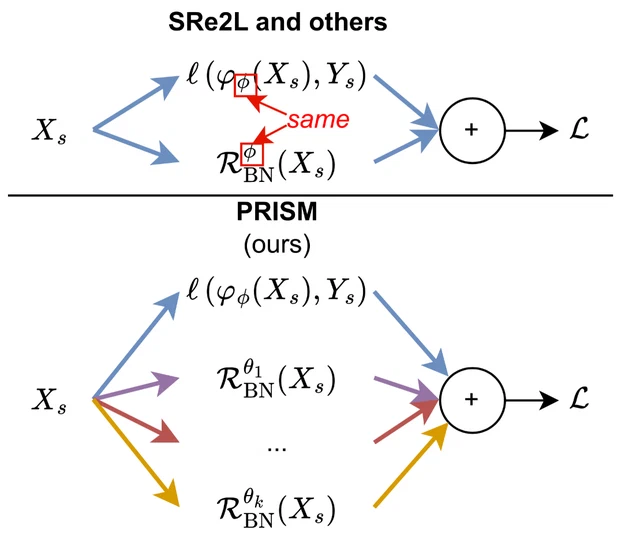
We introduce PRISM, a framework that disentangles architectural priors for dataset distillation, outperforming single-teacher setups.

PDF
2025
SubZeroCore: A Submodular Approach with Zero Training for Coreset Selection
arXiv

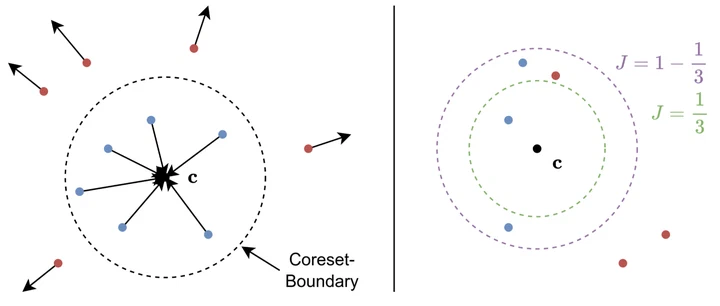
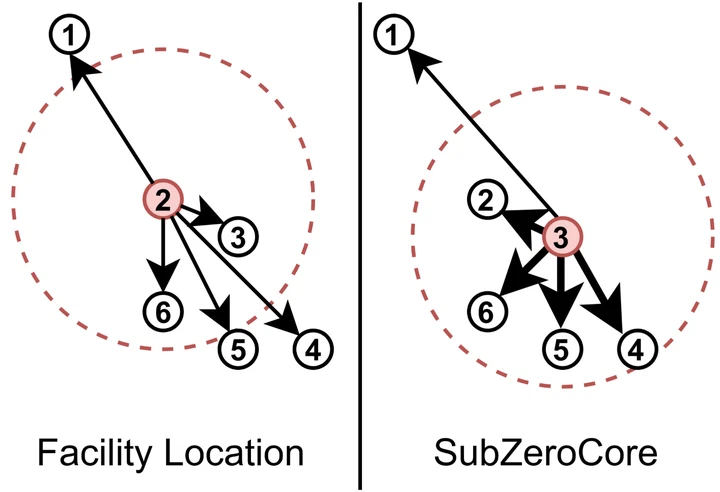
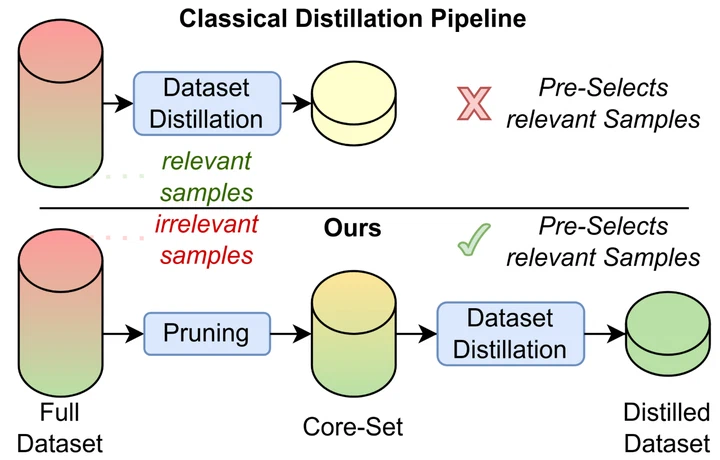
We introduce SubZeroCore, a novel, training-free coreset selection method that integrates submodular coverage and density into a single, unified objective.

PDF
2025
HyperCore: Coreset Selection under Noise via Hypersphere Models
arXiv

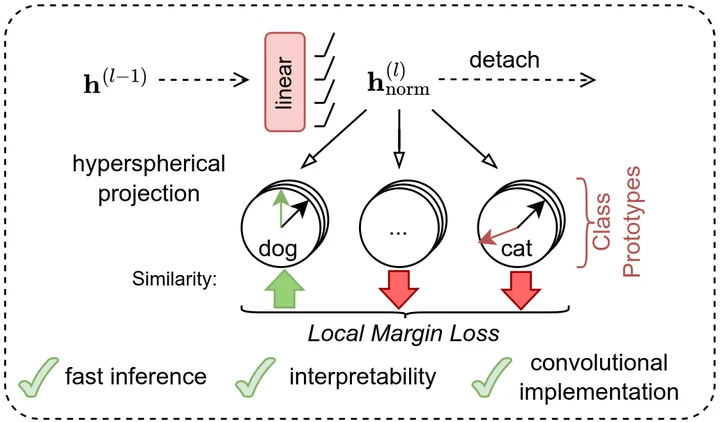
We present HyperCore, a lightweight adaptive coreset selection framework designed for noisy environments. HyperCore utilizes per class hypersphere models and adaptively selects pruning thresholds.

PDF
2025
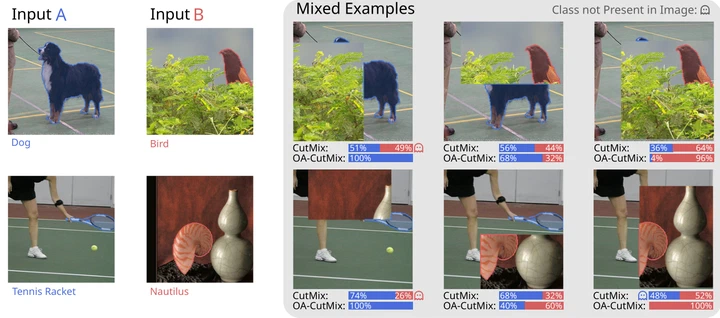
ForAug: Recombining Foregrounds and Backgrounds to Improve Vision Transformer Training with Bias Mitigation
arXiv

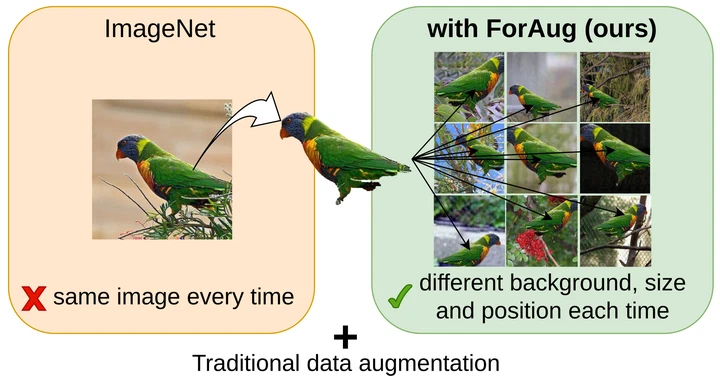
We improve the training of vision transformers by segmenting and recombining objects and backgrounds from datasets. This makes the transformers more accurate, as well as more robust.

2025
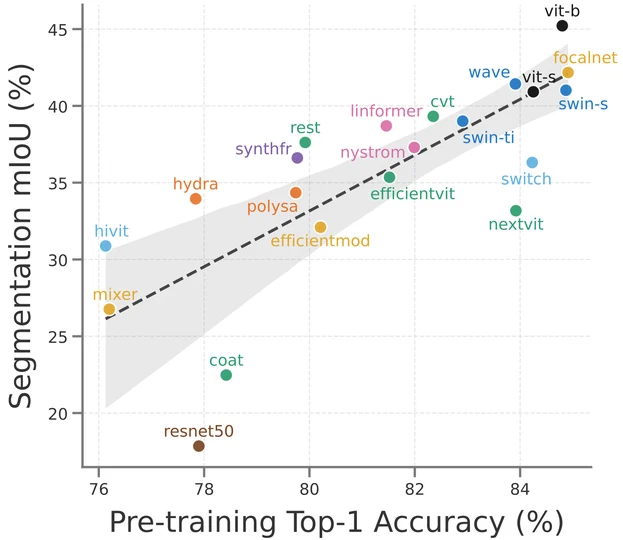
Which Transformer to Favor: A Comparative Analysis of Efficiency in Vision Transformers
WACV 2025

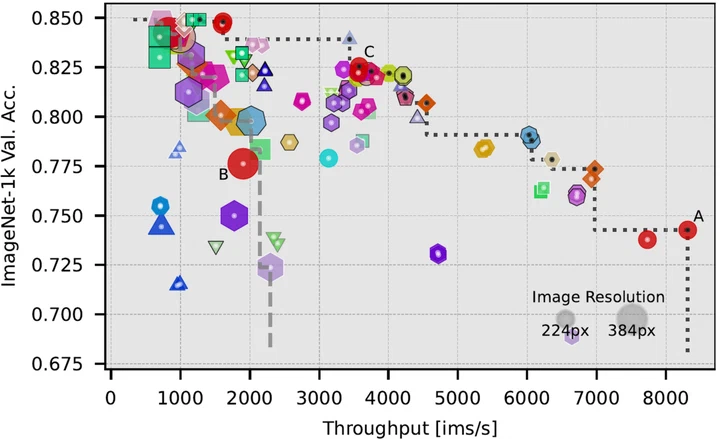
A comprehensive benchmark and analysis of more than 45 transformer models for image classification to evaluate their efficiency, considering various performance metrics. We find the optimal architectures to use and uncover that model-scaling is more efficient than image scaling.

2024
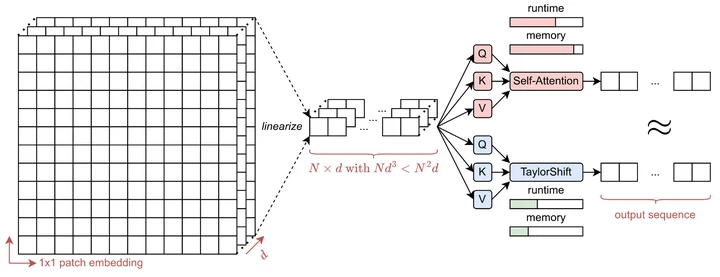
TaylorShift: Shifting the Complexity of Self-Attention from Squared to Linear (and Back) using Taylor-Softmax
ICPR 2024 (oral)

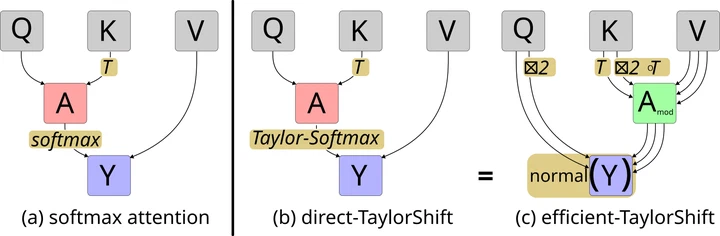
This paper introduces TaylorShift, a novel reformulation of the attention mechanism using Taylor softmax that enables computing full token-to-token interactions in linear time. We analytically and empirically determine the crossover points where employing TaylorShift becomes more efficient than traditional attention. TaylorShift outperforms the traditional transformer architecture in 4 out of 5 tasks.

2024
Stochastic Control with Signatures
SIAM Journal on Financial Mathematics

This paper proposes a new method to parameterize open loop controls in stochastic optimal control problems using path signatures. We show that these controls are dense in the space of all admissible controls and establish conditions for stability of the controlled dynamics and target functional.

2022
Stochastic Optimal Control using Signatures
Master Thesis

We consider a stochastic control problem and try to solve it using the signature method.

2021
Explaining Graph Neural Networks
Bachelor Thesis

We extend and test KEdge, an interpretable-by-design approach for graph neural networks, and compare it to gradient-based attribution techniques.